

On Los Angeles’s Miracle Mile, the La Brea Tar Pits and Museum brings Ice Age fossils into view across an active excavation site and its surrounding park. It’s a chance to explore fossil digs and the park landscape in one visit.
- Location: Eastern portion of Hancock Park, in the Miracle Mile district.
- Outdoor highlights: Two active excavation sites, Project 23 and Pit 91.
- Park landscape: The Pleistocene Garden has four ecological systems.
- Tickets and hours: Temporarily closed
What to see at the La Brea Tar Pits
The outdoor highlights at the La Brea Tar Pits are the active excavation sites, the Lake Pit and the Pleistocene Garden.
Start with Project 23 and Pit 91, the park’s two active excavation sites. At the Pit 91 viewing station, you can look over a dig containing bones of extinct animals, including western horses, saber-toothed cats and dire wolves.
Paleontologists discovered Pit 91 and began excavating it in 1915; it is described as one of the world’s longest-running urban paleontological excavation sites.
Project 23 is another active excavation. The site’s fossil deposits preserve plants, insects and animals that became trapped in asphalt over the last 50,000 years. More than 100 fossil quarries, commonly called pits, have been excavated here since the turn of the 20th century.
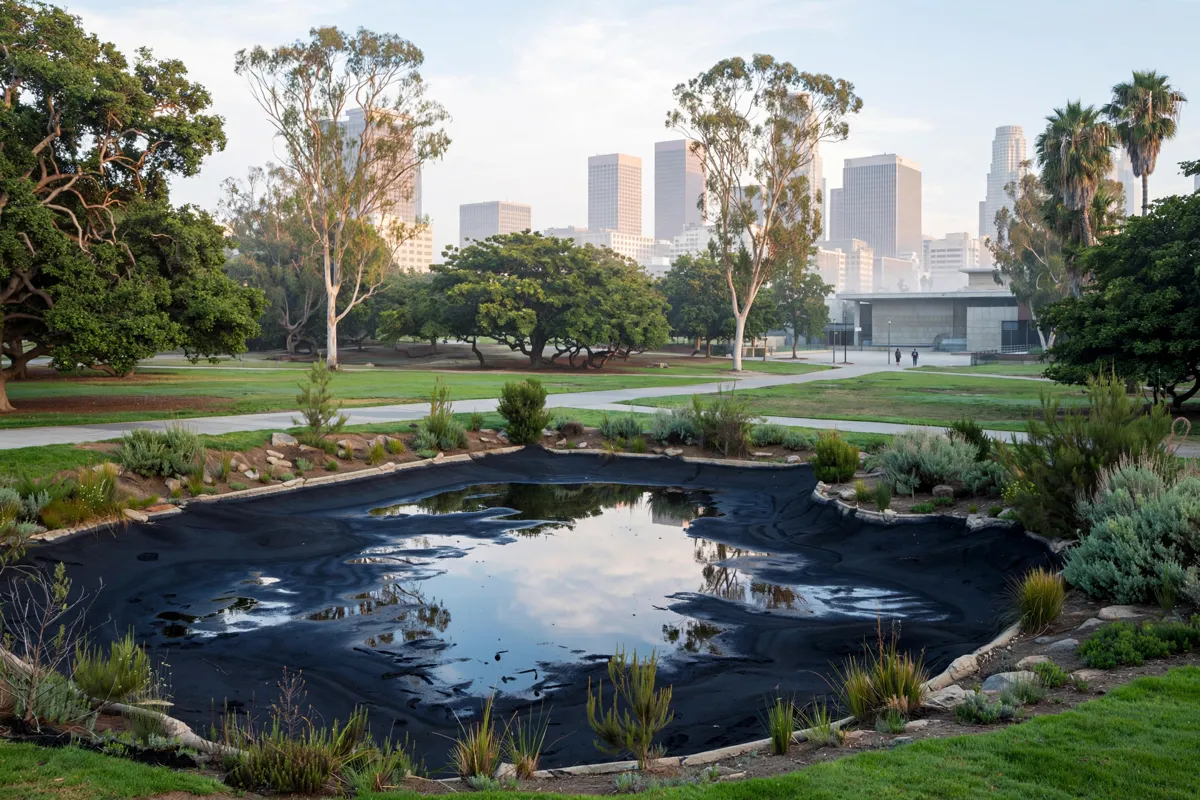
Make time for the Lake Pit, a remnant of asphalt mining operations in the late 1800s. Rain and groundwater collect above the asphalt, and the site includes a recreation of a mammoth becoming trapped. The black material seeping to the surface is asphalt, not tar; the distinctive odor comes from hydrogen sulfide.
The Pleistocene Garden is arranged into four ecological systems: Coastal Sage, Riparian, Mixed Evergreen/Redwood Forest and Chaparral. It gives you another way to take in the site’s outdoor landscape alongside the fossil excavations.
Museum tickets and opening hours
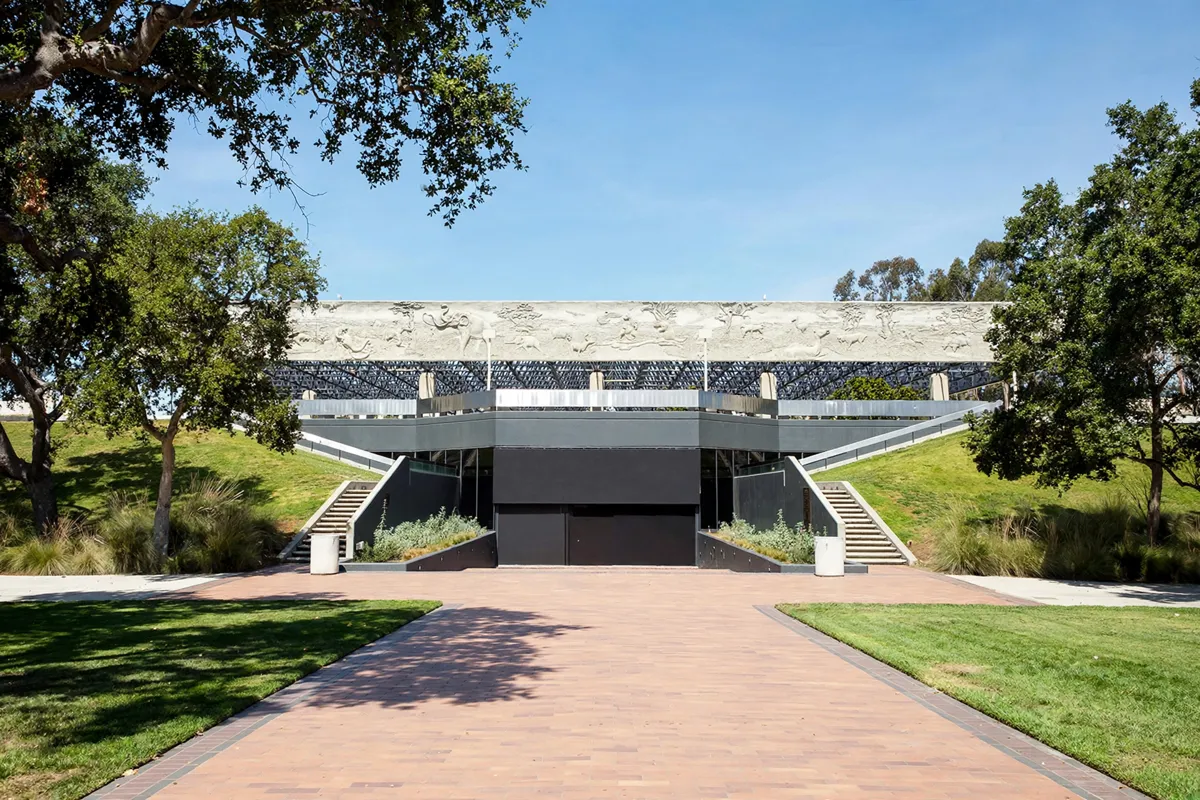
Check the official site before you go for current museum admission, indoor opening hours and any visitor requirements.
Outdoor areas and indoor museum access are distinct parts of a visit, so confirm which areas are open on the day you plan to go. The Pit 91 viewing station is listed as open daily from 9:30 am to 5 pm; hours can change, so verify them with the official site before setting out.
On-site parking is restricted to La Brea Tar Pits Insider Tour ticket holders who show proof of purchase at the entrance. The official site names parking structures at LACMA, the SAG-AFTRA building and the Petersen Automotive Museum as alternatives. Parking on Wilshire Boulevard can result in a ticket and tow, including at a meter.
Temporarily closed
This place is listed as temporarily closed. Check the official site before you go.
Last checked November 2026.
How do you get to the La Brea Tar Pits?

Metro’s D Line to Wilshire/Fairfax station is the recommended transit route. Show a TAP card when checking in to receive a $2 discount. From Mid City Inn, the Tar Pits are about 8 minutes away by car.
If you’re driving, don’t plan on using the Tar Pits car park unless you have an Insider Tour ticket and can show proof of purchase. The alternative parking structures named by the official site are at LACMA, the SAG-AFTRA building and the Petersen Automotive Museum. Keep the Wilshire Boulevard parking restrictions in mind when choosing a spot.
Pair your visit with the Los Angeles County Museum of Art, another museum in the area with a collection spanning art from ancient times to the present.
Planning your visit
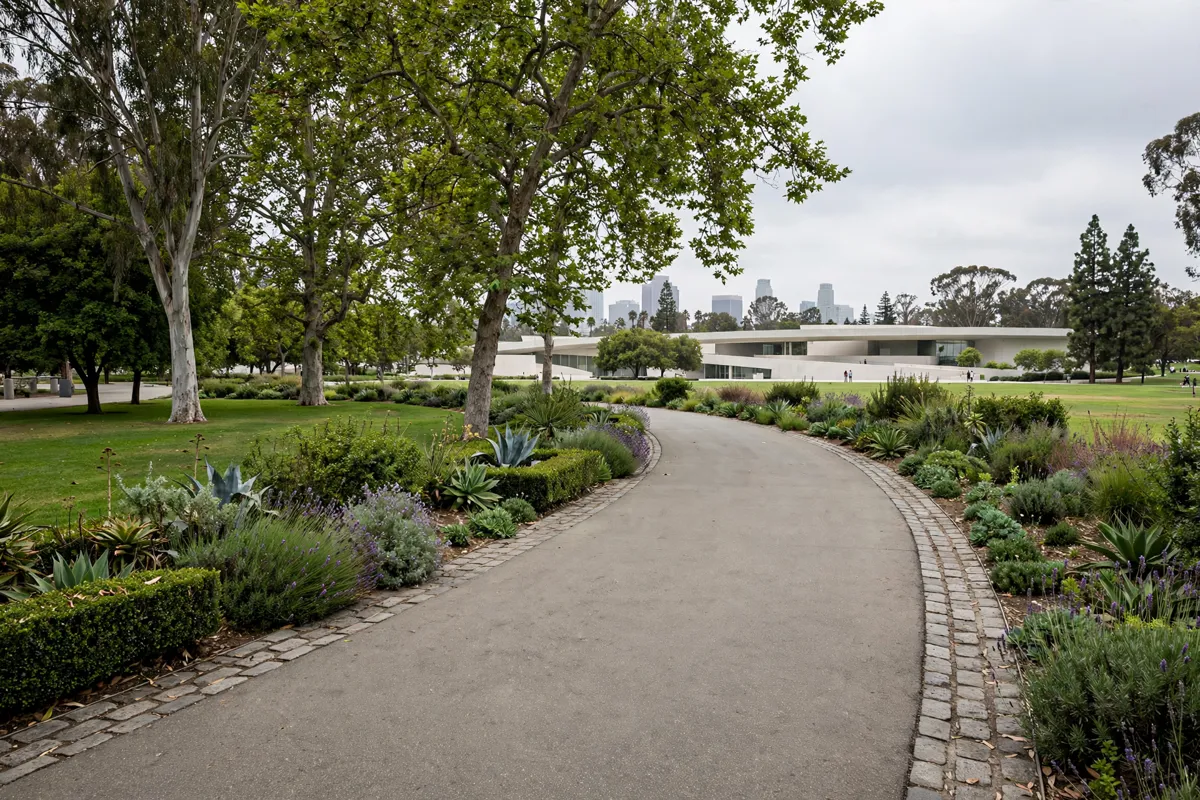
Plan your outdoor time around the excavation sites and the park’s landscapes, then confirm which indoor areas and services are available before you leave.
Research at the Tar Pits began in 1913. A two-year excavation project launched that year by the Los Angeles County Museum of History, Science, and Art recovered a million fossil bones from 96 quarries. The George C. Page Museum of La Brea Discoveries opened in 1977, and its name changed to La Brea Tar Pits & Museum in 2015.
For a city-wide itinerary, the Los Angeles in a Day route from Mid City maps out a broader day in the city.
FAQs
What can you see at the La Brea Tar Pits?
Outdoor sights include Project 23, the Pit 91 viewing station, the Lake Pit and the Pleistocene Garden. Pit 91’s dig contains bones of extinct animals such as western horses, saber-toothed cats and dire wolves.
Are the La Brea Tar Pits an active fossil site?
Yes. The park has two active excavation sites, Project 23 and Pit 91, and its deposits preserve fossils of plants, insects and animals trapped in asphalt.
Is there parking at the La Brea Tar Pits?
The car park is restricted to La Brea Tar Pits Insider Tour ticket holders who show proof of purchase. The official site identifies structures at LACMA, the SAG-AFTRA building and the Petersen Automotive Museum as alternatives.